DOST’s E-TURO Brings Offline Digital Learning to Connectivity-Challenged Schools in Ilocos Norte
3 min read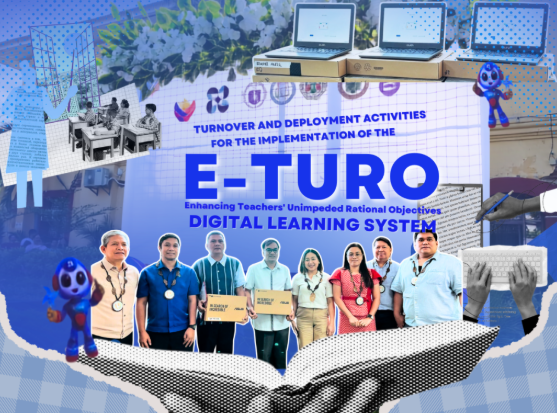
DOST’s E-TURO Brings Offline Digital Learning to Connectivity-Challenged Schools in Ilocos Norte | DOST and DepEd launch the AI-powered E-TURO Digital Learning System in Ilocos Norte, enabling schools to access digital learning resources even without reliable internet connectivity.
SAN NICOLAS, Ilocos Norte (PIA) — Students and teachers in schools with limited or unreliable internet access in Ilocos Norte are gaining access to digital learning resources through the Department of Science and Technology’s (DOST) Enhancing Teachers’ Unimpeded Rational Objectives (E-TURO) Digital Learning System.
DOST and the Department of Education (DepEd) formally launched the initiative on September 15 at San Nicolas Elementary School, introducing an offline-capable digital learning platform designed to help schools maintain access to educational resources even when internet connectivity is unavailable.
What is the DOST E-TURO Digital Learning System?
E-TURO is an AI-powered learning management system (LMS) with offline capabilities. It allows schools to access digital educational materials through local servers, reducing their dependence on continuous internet connectivity.
Doctor Teresita Tabaog, DOST Ilocos regional director, explained that the platform is designed to address the digital access gap experienced by schools in connectivity-challenged communities.
“This is just a pilot implementation. Hence, sustaining this project will depend on proper execution to attain our objectives, and everyone has a crucial role to play,” Tabaog said.
The system was developed by RYR Solutions, a DOST Science, Technology, and Innovation (STI) partner. It combines a digital content library with local connectivity infrastructure so teachers and learners can continue using educational resources within the school environment.
How does E-TURO use artificial intelligence?
While E-TURO incorporates AI, DOST clarified that the technology is not intended to generate all of the platform’s educational content.
DOST Science Research Specialist II Justin Madrid said the AI component helps organize and structure learning resources according to the MATATAG curriculum.
“When we say AI, it doesn’t mean that all of its content is AI-generated. What our AI does is take the MATATAG curriculum and use it to generate structured content within the system,” Madrid said.
This approach allows the platform to organize learning materials according to curriculum requirements while making them accessible through the school’s local digital infrastructure.
E-TURO pilot provides laptops and connectivity equipment
The initial E-TURO deployment covers two public schools in Ilocos Norte: San Nicolas Elementary School and Dingras West Central Elementary School.
A total of 95 laptops, together with smart televisions and local connectivity equipment, are being distributed under the pilot program.
- San Nicolas Elementary School: 47 laptops
- Dingras West Central Elementary School: 48 laptops
The equipment is intended to provide teachers and students with access to digital educational resources without requiring a continuously available internet connection.
Teacher training is key to sustaining the technology
For DepEd Ilocos Norte, effective implementation will depend not only on the technology but also on teachers’ ability to use and sustain the system.
Schools Division Superintendent Lawyer Donato Balderas Jr. said DepEd will coordinate with DOST to maximize the platform’s potential and monitor its implementation.
DOST will also conduct a two-day training program to help teachers develop the technical skills required to operate the system.
The training is expected to support the transition from simply providing digital equipment to ensuring that the technology becomes a practical part of classroom and learning activities.
San Nicolas LGU supports digital education initiative
Local government support is also part of the pilot program.
San Nicolas Mayor Ed Mar Vicente Bonoan said the municipality’s involvement reflects its commitment to using technology to expand educational opportunities for residents.
“Our support for E-TURO is therefore not simply support for a digital learning system. It is our commitment to creating a community where technology becomes an instrument for learning, empowerment, and opportunity,” Bonoan said.
E-TURO seeks to address the digital divide in education
The Ilocos Norte pilot brings together DOST, DepEd, local government units, public schools, and a private-sector technology partner to address one of digital education’s ongoing challenges: providing equitable access to learning resources in communities where reliable internet remains a constraint.
By deploying an offline-capable learning management system, the project allows schools to explore how digital and AI-enabled education tools can function in environments where conventional internet-dependent platforms may be difficult to sustain.
The pilot will also provide participating institutions with practical experience in implementing digital learning technologies, including lessons on teacher readiness, technical support, monitoring, and long-term sustainability.
Ultimately, DOST and DepEd officials emphasized that the E-TURO initiative is more than a technology rollout. Its effectiveness will depend on proper implementation, teacher training, monitoring, and sustained institutional support to help ensure learning continuity and more equitable access to digital education in connectivity-challenged communities.
(AMB/ATV, PIA Ilocos Norte